Microwave Effects on the Human Body
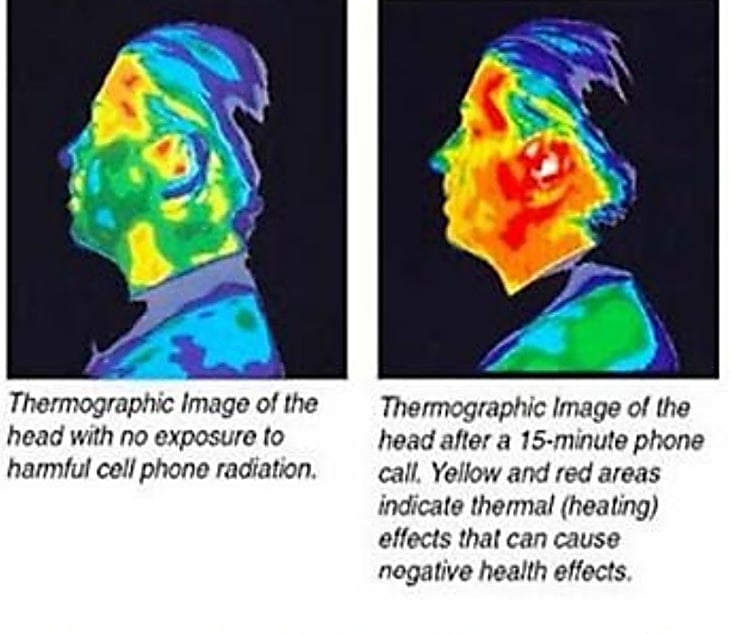
Cancer: Strong Signal for Cell Phone Effects
We found that cell phone use is linked to gliomas [malignant brain tumors] and acoustic neuromas [benign tumors of the brain’s auditory nerve] and are showing up after only ten years,” says lead author Lennart Hardell, an oncologist and cancer epidemiologist at University Hospital in Örebro, Sweden. Specifically, for studies that included at least 10 years of exposure, there was a doubling in the risk of gliomas for ipsilateral (same-side) but not contralateral (opposite-side) exposures to the head (as reflected by which hand the subject typically used to hold his/her cell phone). https://pmc.ncbi.nlm.nih.gov/articles/PMC2569116/
Children and Cell Phones
There are several studies of the impact of cell phone radiation on children.
A study published in 2018 revealed that a child’s brain absorbs 2-3 times more radiation than an adult’s, particularly when a cell phone is position next to the ear or in front of the eyes to view virtual reality.1 Similarly, an earlier study reported that, “in general and on average, children suffer a higher exposure of their brain regions than adults” because children have proportionally smaller heads and brains, yet receive the same levels of cell phone radiation as adults.2 The American Academy of Pediatrics agrees, saying that “when used by children, the average RF energy deposition is two times higher in the brain and 10 times higher in the bone marrow of the skull, compared with mobile phone use by adults.”3
Research also suggests that people who begin using cell phones (and cordless landline phones) before the age of 20 are at an even higher risk of developing brain tumors than people who begin using these wireless phones as adults.4 This is because of the closer proximity of the source of radiation to the brain of kids (they have thinner tissues and bones than adults).
Moreover, cell phone exposure could affect children’s behavior.5 The children in the study who were hyperactive or had emotional or behavioral problems, including trouble getting along with other kids, were much more likely to have mothers who used cell phones during pregnancy. After accounting for other factors that could affect behavior, the children of these mothers were 80% more likely to have behavioral problems than children whose mothers rarely or didn’t use cell phones. However, this is difficult to study because mothers who use cell phones frequently during pregnancy or after the baby is born, may pay less attention to their children, resulting in the children’s bad behavior. More research is needed to understand the link between mother’s cell phone use and children’s behavior.
Children that used cell phones more were more likely to have ADHD. Although the link to ADHD was only for children who also had high levels of lead in their blood, when researchers adjusted for blood lead level, they still found that ADHD was more likely for children who made more phone calls and spent a longer amount of time on the phone.6 This study was conducted in Korea, so it would be important to do similar research on children living in other countries.
A 2014 article reviewing studies on children and their cell phone use found that the younger the child, the greater the risk of brain cancer and brain tumors. The same article also points to studies concluding that cell phones are associated with an increased risk of breast cancer (due to adolescents putting cell phones in their bras), parotid (salivary) gland tumors, and sperm damage for adolescents and adults.7 https://www.center4research.org/children-cell-phones-phone-radiation-risky-kids/
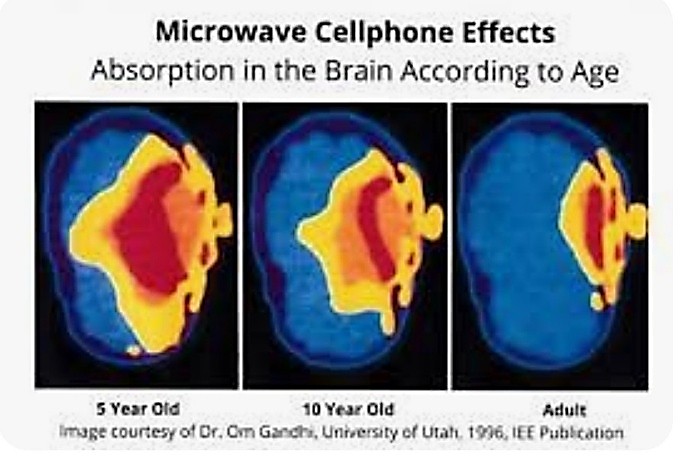
Cell phones emit a type of radiation that is known as Radio Frequency-Electromagnetic Radiation (RF-EMR), also referred to as microwave radiation. There have been concerns from the scientific community about whether or not cell phones are safe. Cancer is a particular concern, but since cancers take 10-20 years to develop and children’s frequent cell phone use is a relatively recent development, there are more questions than answers. To read more about whether we should be worried about cell phone radiation in general, read our article here.

Hold your cell phone away from your body: Research links cell phones to tumors
https://www.youtube.com/watch?v=WYF2frEpT_Q
Microwave Radiation and the Brain: Mechanisms, Current Status, and Future Prospects, Citation: Mumtaz, S.; Rana, J.N.; Choi, E.H.; Han, I., Int. J. Mol. Sci., Published Aug 18, 2022, https://pmc.ncbi.nlm.nih.gov/articles/PMC9409438/pdf/ijms-23-09288.pdf
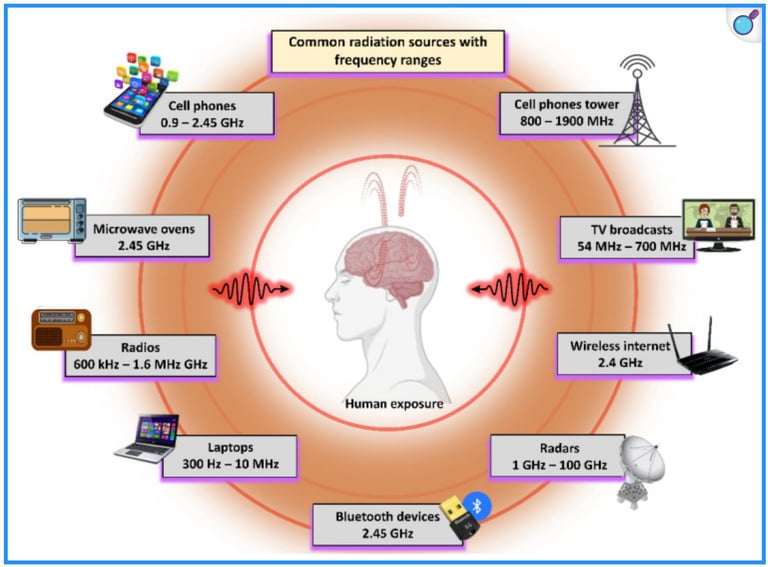
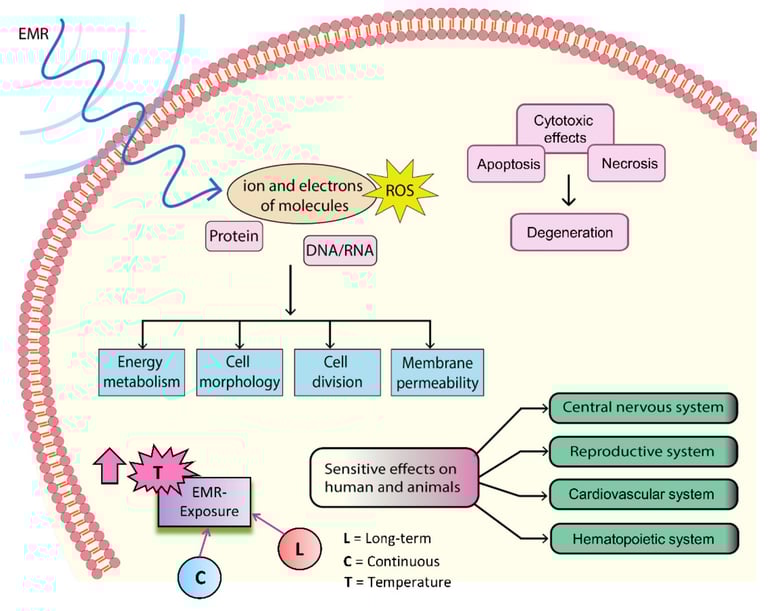
Figure 1. Depiction of daily commercial and household radiation sources with corresponding operational frequency ranges.
Figure 2. A generalized representation of the interactions between EMR and biological systems, with common effects. The EMR has an impact on molecular ions and electrons, as well as ROS, protein, and DNA/RNA levels. Furthermore, the EMR has cytotoxic effects on cells by causing degeneration, apoptosis, and necrosis. EMR has a strong impact on the central nervous system, reproductive system, cardiovascular system, and hematological system. Furthermore, the constant and long-term exposure of EMR to a biological system raises tissue temperature, which is a frequent effect of different stimuli.
I have put the Introduction here for you to get interested and then go to the original article. There are more illustrations.
1. Introduction.
Microwaves are recognized as nonionizing radiation, with a broad frequency spectrum ranging from 300 MHz to 300 GHz. Specifically, the bands from 300 MHz to 3 GHz are UHF (ultra-high-frequency), 3–30 GHz are SHF (super-high-frequency), and those from 30 to 300 GHz are EHF (extremely high-frequency). Additionally, microwaves that exceed a peak power of 100 MW with an operation frequency lying between 1 to 300 GHz are generally considered high-power microwaves (HPMs). HPMs are commonly employed in modern technologies, and have been proven to be indispensable in our lives, with uses in the commercial, military, and medical fields [1 –4]. Pulse microwave sources and non-pulse microwave sources are the two types of HPM sources available. A microwave source with a rising edge of sub-nanoseconds or picoseconds is referred to as a pulsed microwave source.
A primary drive (explosive or pulse generation system), a pulse compression system, a microwave generation source, and an antenna are all included. Through low-speed storage and fast release of energy, pulse sources typically transform energy into short-pulse EMR.
Radio waves are electromagnetic waves that range from 3 kHz to 300 GHz in frequency. To observe astronomical objects, radio waves are commonly employed as envelope signals on radio communication and wavelength channels. Microwaves are a form of short-frequency radio waves. They can be categorized as a radio wave subclass. Microwaves have a frequency range of 300 MHz to 300 GHz. Microwaves are commonly employed in microwave ovens because resonance frequency of water molecules is in the microwave range. Radars, astronomy, navigation, and spectroscopy all employ microwaves. Accordingly, the development of advanced electronics and novel microwave-based systems has made microwaves an important part of our daily lives. More specifically, the increasing number of radio-wave-based applications has led to the investigation of their biological effects. In the following review, the possible mechanisms and interactions of radiations with biological systems are synthesized.
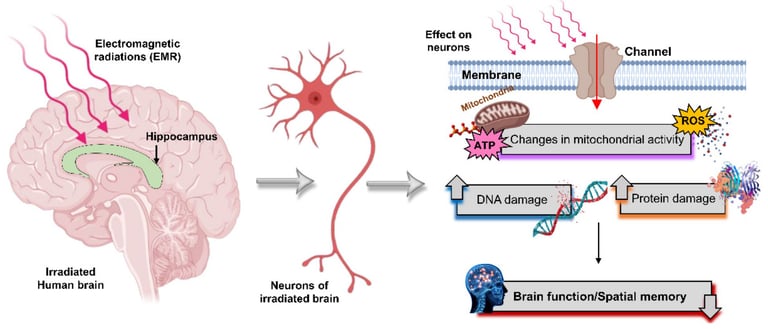
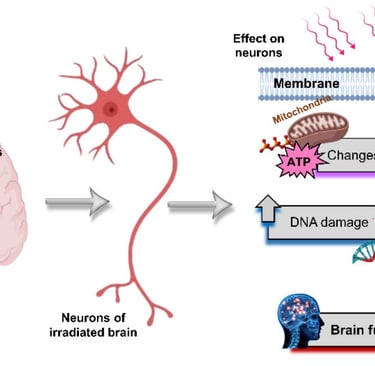
Figure 6. Representation of microwave radiation effects on the brain. Microwave radiation induces protein damage in neurons, changes mitochondrial activity by influencing the formation of ROS and ATP levels, and causes breaks in single- and double-strained DNA, which leads to brain dysfunction and declines in spatial memory.
Effects of microwave radiation on brain energy metabolism and related mechanisms, Yan-Hui Hao 1, Li Zhao 1,✉, Rui-Yun Peng 1, Mil Med Res, . 2015 Feb 17;2:4. https://pmc.ncbi.nlm.nih.gov/articles/PMC4440565/pdf/40779_2015_Article_33.pdf
Abstract
With the rapid development of electronic technologies, anxiety regarding the potential health hazards induced by microwave radiation (MW) has been growing in recent years. The brain is one of the most sensitive target organs for microwave radiation, where mitochondrial injury occurs earlier and more severely than in other organs. Energy metabolism disorders do play an important role during the process of microwave radiation-induced brain damage. In this paper, we will review the biological effects of microwave radiation, the features of brain energy supply and consumption and the effects of microwave radiation on mitochondrial energy metabolism and potential related mechanisms.
Compound exposure of 2.8 GHz and 9.3 GHz microwave causes learning and memory impairment in rats, Liu Sun, et al., Anhui Medical University School of Basic Medicine, Hefei, 230032, China, Beijing Institute of Radiation Medicine, Beijing, 100850, China, https://www.cell.com/action/showPdf?pii=S2405-8440%2825%2900005-2
Radiations and male fertility
DNA damage
The majority of infertile men present with DNA damage [98,99,100]. Apart from several other lifestyle factors, cell phone use has been identified to induce sperm DNA damages [26] as a result of an overproduction of reactive oxygen species (ROS) in men continuously using mobile phones. This may lead to the development of different pathologies including tumors, and problems in the spermatogenesis [25, 67].
RF-EMF exposure and Genotoxicity:
Many in vitro and in vivo studies showed that EMF induced genotoxic single- and double-strand DNA breaks, micronucleus formation, chromosomal abbreviations, changes in gene expression, cell proliferation and apoptosis [25, 26, 94,95,96,97]. Such changes are responsible for genomic instability and promote tumorigenic effect in cells. We explore the genotoxic effect of RF EMF on sperm parameters and possible infertility outcome as discussed below and which is also represented in Figure 2.
https://link.springer.com/article/10.1186/s12958-018-0431-1
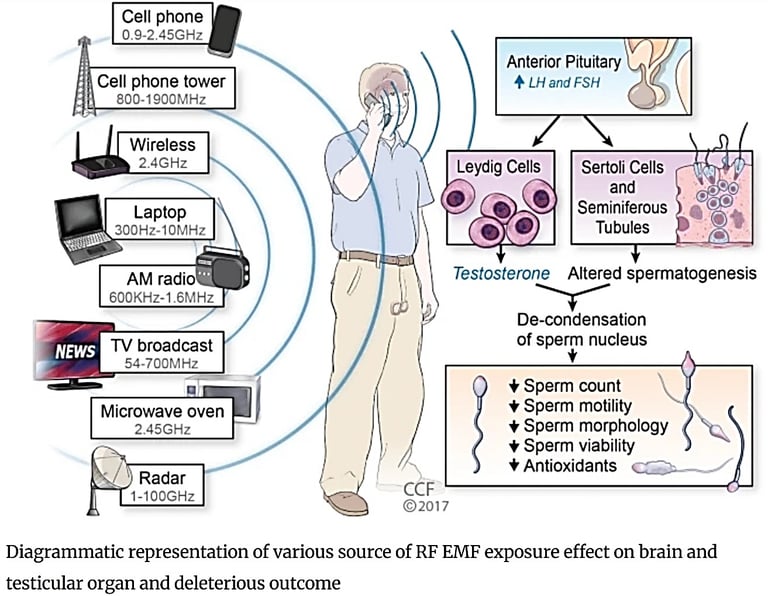
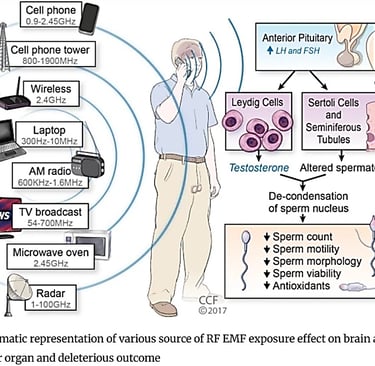
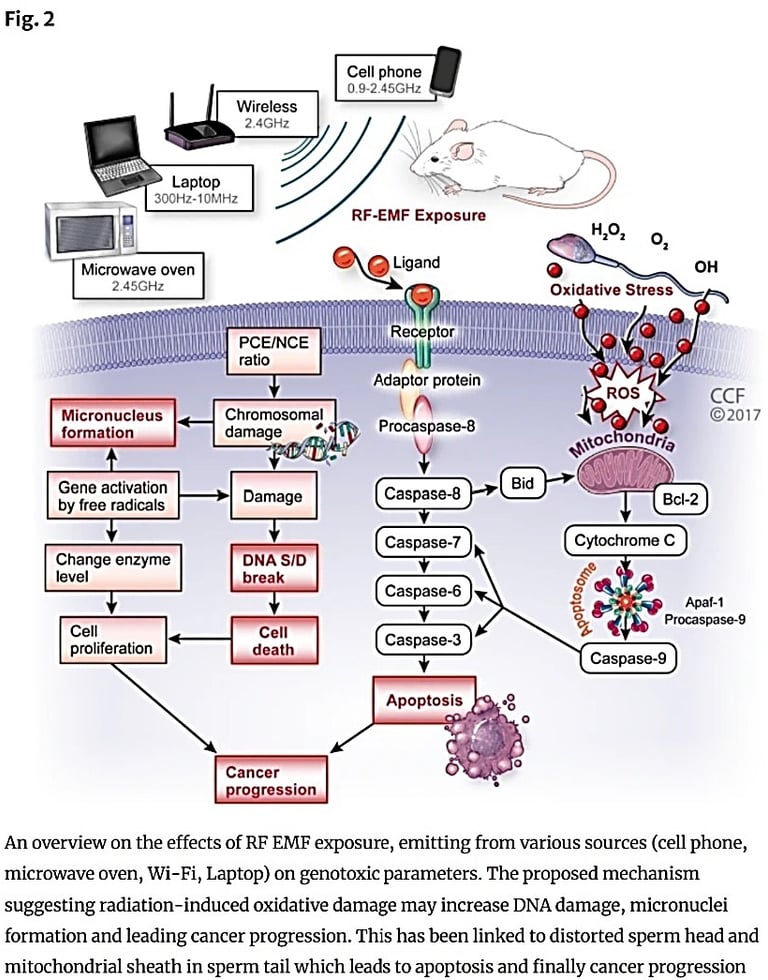
Since early 1962, many man-made devices are now in use and the most common source for microwaves are transmission lines (50–60 Hz), computer monitors (60–90 Hz), AM radio transmissions (530–1600 KHz), FM radio transmissions (88–108 MHz), television transmissions (50–700 MHz), hand phones (850 MHz-2.4 GHz), microwave ovens (2.45 GHz), laptops and Wi-Fi (2.4 GHz).
The frequencies in the range of 100 kHz to 300 GHz refer to RF and represent only a part of the electro-magnetic spectrum. Figure 1 shows the sources of radiofrequency electromagnetic field (RF-EMF) exposure affecting sperm parameters. In the list of new technologies, intermediate frequency (IF) has been listed as newest source of exposure to electro-magnetic fields. This frequency range falls between the low frequency (low frequency- 0.1 Hz–1 kHz) and the radio frequency (RF) (10 MHz–300 GHz). Major sources of this range are airport security scanners and anti-theft devices operated at the exits of shops.https://link.springer.com/article/10.1186/s12958-018-0431-1
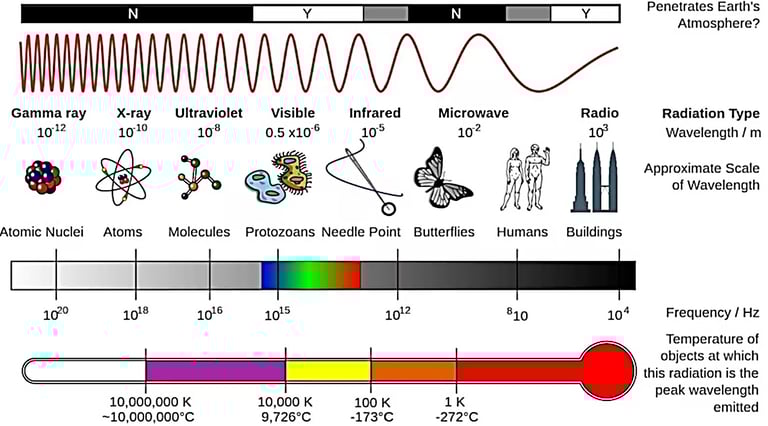
Electromagnetic Spectrum
Join us in advocating against harmful technology misuse.
contact@targetedhumans.org
© 2025. All rights reserved.
Targeted Humans Inc.